
Set against the backdrop of a dystopian future where India is celebrating 100 years since independence in 1947, Indian National Award-winning filmmaker Pradip Kurbah’s drama Ha Lyngkha Bneng (The Elysian Field, 2025) probes what kind of tomorrow that will be. The film traces the lives of the last six remaining members of the Laitduh village, who seem to have been all but forgotten and left to their own devices in the remote Khasi Hills of Meghalaya, while the outside world has moved on.
The English title of the film—'The Elysian Field’—embodies an interesting duality. On the one hand, you could read it as a prayer for a more hopeful afterlife, a desire for a future better than the miserable present the surviving villagers find themselves in. On the other hand, it could also be read as a wake-up call from Kurbah, who grew up in Shillong, urging his people and community to avoid the pessimistic fate that befalls Laitduh.
In Kurbah’s sentimentalism, one finds strokes of Frederick Wiseman’s community-forward lens (such as the humanism of In Jackson Heights, 2015) infused with Ken Loach’s political subtext of how a post-capitalist order has eroded our sense of collective purpose and community (as in Sorry We Missed You, 2019).
The Elysian Field had its Indian Premiere at the Kolkata International Film Festival (KIFF) on the back of being selected at the Moscow International Film Festival, where it was crowned Best Film in the Main Competition, and Kurbah was awarded Best Director. Kurbah’s insights about the film and my observations (in italics) are woven together in the discussion below.
Try as I might, I cannot, in good conscience, disregard the film’s journey so far and what that says about how fragile, fickle, and selectively moral the film festival ecosystem can be. The Official Selection and the subsequent wins at Moscow must've felt incredible. As we’ve discussed separately, the selection in Russia ended up closing rather than opening doors for the film. Could you talk about some of these complex feelings? Have you processed it all now?
Pradip Kurbah: I'm happy about the film’s journey right now. After winning Best Film and Best Director in the Main Competition at the 47th Moscow International Film Festival, we've been sidelined from many festivals due to the ‘Russia’ tag and the way international politics is playing out right now. And film festivals don’t happen in a vacuum. But that's okay. I believe that every film has its own journey. So, ‘The Elysian Field’ has had its own journey. For a while, there was nothing. And now, we’re having the Indian Premiere at the Kolkata International Film Festival, that too, in the Indian competition. We are headed to the International Film Festival of Kerala in the Main Competition after this. I have tried to move on and not get too attached. Whatever is meant to happen will happen. The highs and lows are part and parcel of filmmaking, especially in indie cinema. The struggle, the travel and the validation that we seek, it’s essential for us. But in the end, the film will decide its own course.
Kurbah uses the changing seasons as a deliberate rhythm that structures the narrative, and employs a colour palette that underlines the various stages of grief—from denial to acceptance—that the surviving villagers go through as they grapple with the fact that the future won’t be any better than their miserable present.
PK: Most of the people who wanted to come on board as funders for this project didn't understand the film's vision. I wanted to shoot the movie in parts, aligned with every season. When you look at a particular season, that’s a whole year. A funder will not wait for a year. It’s a very old-school way of filmmaking. And this clarity and approach to how we were going to shoot was present from the script level itself. We were very clear that we would shoot this film in every season. That was very important. For me, the life we’re living is like seasons in a year. So, this parallel was something I wanted to bring in very subtly, whether people understood it or not. But most of the funders we approached didn't understand this concept. So, in the end, my team, my cinematographer, and my artists all got on board. They became the producers, and that's how we made the film.
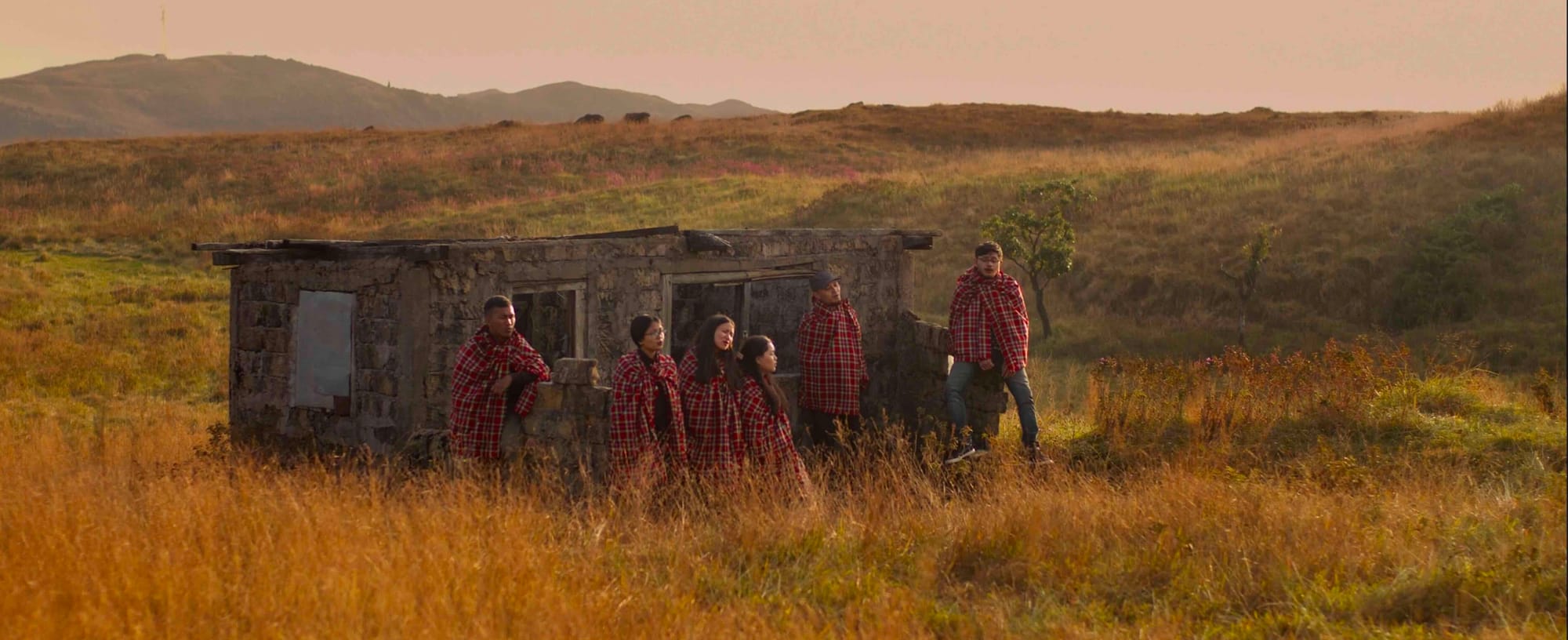
The idea of employing different seasons in a year as a narrative device and giving the film an implied structure is a really interesting choice. How easy or difficult was it to get people on board for this vision?
PK: Before we commenced filming, I had significant doubts about whether this concept could work in the way the treatment was done and the way I wanted to tell my story. So, I sat together with the team, and we agreed to make a proof-of-concept style short film before jumping into a full-length feature. I made the short keeping in mind the treatment of the full feature that was to come. It was a 20-minute short film. To test this proof of concept, we started sending the short film to festivals. And it got a World Premiere in Greece. Then, it won in Kerala. It won in Taipei. Then it won in Paris. So, with all of these accolades under our belt, we felt that we were on the right track. Afterwards, we started the feature. The short film was like a workshop for us.
I believe in rehearsing before the shoot. As indie filmmakers, we cannot afford to waste time on the sets. So, while rehearsing, my actors got clarity about what we were doing. We all had to be on the same page. It's not just my vision; it's the team's vision too. I'm not a dictator on set. We come, we discuss, we brainstorm, then we decide. Collaboration is essential for me.
This brings me to the question of finding the right rhythm for this film. There is a certain lyricism to the composition—the extended take in the very beginning, where Livingstone returns to the village with the coffin of his recently deceased wife, is a good example—that has shades of the slow cinema movement and masters like Lav Diaz and Tsai Ming-liang.
PK: I wanted to make a film so that, over time, my audience feels they are present in that space. So, the camera placement was very important for us. You place the camera so people forget it's there. We would shoot a scene with a particular camera position. I would look at the scene through the audience's eyes to see if it worked. There were minimal cuts. It was vital for me to convey the sense of isolation my characters were feeling. So, the moment I choose to cut unnecessarily, you lose that rhythm and sense of immersion. Even now, after having watched the film, I could have done better with some scenes.
To create an internal cinematic rhythm, the writing is critical. People have come up to me after watching the film and told me they found it very philosophical. But that was not my approach. All I’ve done is make a film. It’s up to you to interpret it the way you want to. Some have even read the film as having a powerful political statement. That wasn’t my intention either. You need to be honest with what you’re doing. That honesty should reflect in your work.
We were very particular about the film's rhythm. It had to be balanced and suited to the narrative. If you saw my first cut, it was almost three hours long. It all comes back to framing the film through seasons. For example, during the winter, everything slows down. But that wasn’t true for my characters. Their life doesn’t slow down at all. So, catching that implicit rhythm was important, and it was a balancing act.
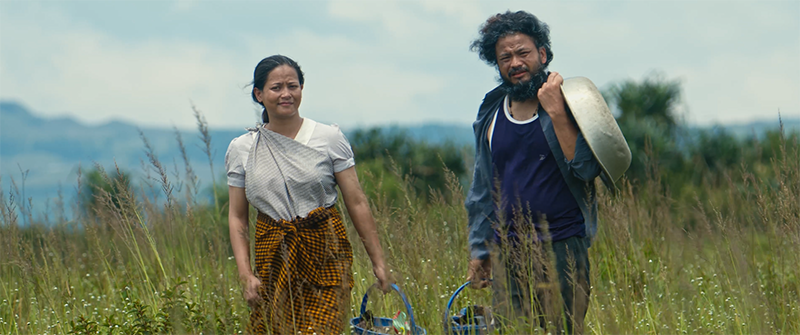
Radio bulletins proudly highlight authorities announcing development projects in Meghalaya. But this promise of ‘progress’ is juxtaposed with the grim reality of Laitduh's residents, who struggle to access basic amenities such as electricity. The gap between promise and delivery creates an undertone of dark humour that carries through the film.
PK: In 2047, there’s a real possibility that things may indeed be like what is shown in the film, especially for certain remote regions. It’s a kind of warning to the people in my hometown, please, don’t let your future be like this. I would love to be proven wrong. But we need to be prepared for this eventuality. We are losing the sense of community, of really knowing each other.
I wonder where this macabre sense of humour comes from? Because all the sentimentalism aside, this is also a wickedly funny film. Not everyone may be a fan of gallows humour, but I quite enjoyed it.
PK: You'll see this in every film of mine: humour is part of our lives. For example, if I don't put up anything on social media for a day or two, I start to get messages, ‘Are you okay? Where are you? What happened to you?’ So, I like putting up humorous statuses about something or the other now and then because it makes people smile. It gives them something to laugh about.
I don’t believe in complaining. I accept the way things are. It isn’t easy to be an indie filmmaker. But, at the same time, it’s never been easy. Do you want to make a film, or do you like the tag of being a filmmaker? If you want to make a film, make one. If I want to make a film, finding a way to fund it is my headache. There’s no point in wallowing in self-pity.
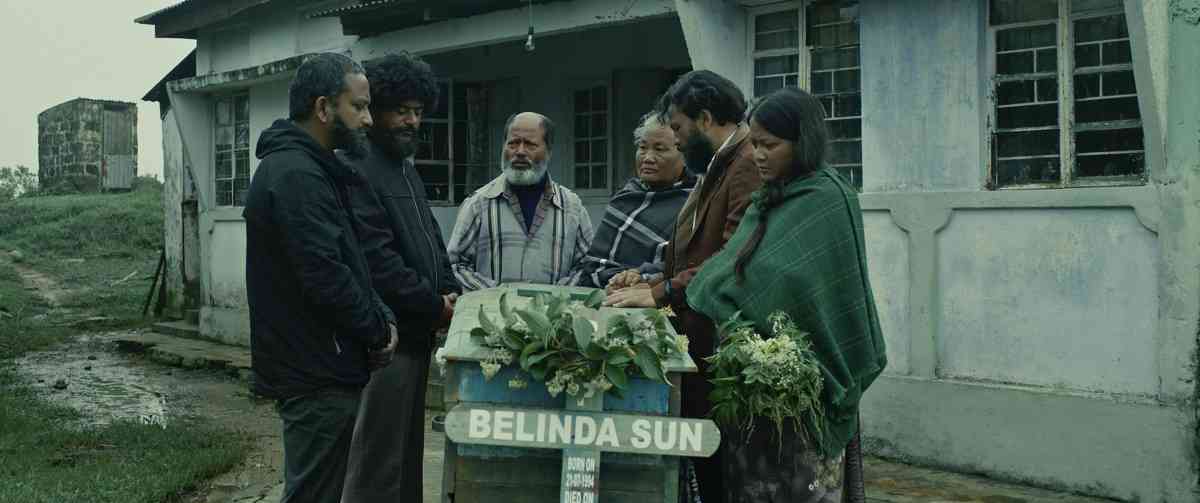
Whether it's Meghalaya or other Northeastern states, authentic mainstream representation of characters from these regions has been few and far between. This was a common theme in my conversations with other filmmakers from the region, including Tribeny Rai and Dominic Sangma. What are your views on this?
PK: Dominic has been a big help to me. I really look up to him. He is one person who introduced me to a particular kind of cinema that I wasn’t aware of. I’m a self-taught filmmaker, and he's been such a big help in understanding cinema better. While working on the script for this film, I would talk with him and get his suggestions.
Regardless of our differences, we share the same emotions as human beings. Whether it’s the story of the Garo community or the Khasi community, the emotions remain universal. I agree that it's important to tell authentic stories about particular communities. But at the same time, there is a universal humanity that we share. For me, not losing sight of this humanity is very important. That's why most of my films are, at their core, human stories.
This is a film about choosing hope. But at the same time, it’s full of lament—that we are hurtling towards a future that’s filled with despair and loneliness, and try as might, it’s likely that we shall succumb to it. Beyond the film, are you worried about what kind of future we are creating?
PK: Nowadays, whenever I see people in crowded places, I sense that they’re very lonely. It’s a procession of lonely faces wherever I go. Kolkata is so crowded, but all I see are lonely faces. Even in my home, I have my wife and kids, but sometimes I look at them and realise how lonely we are. We are all in our own world.
The Elysian Field won the Golden Saint George for Best Film at the Moscow International Film Festival and had its Indian Premiere at the Kolkata International Film Festival, where Pradip Kurbah was awarded Best Director in the Indian Language Competition.